Why the Frida Mom Ad Hit a Nerve
In 2020, Frida Mom, yes the company that helps us clear our children’s boogers, released an ad aimed at postpartum moms. The ad goes like this: a baby cries in the middle of the night, Mom turns on the lamp, shuffles out of bed in her underwear and oversized shirt, comforts the baby, and then hobbles to the bathroom to change her giant postpartum pad. The wincing with the peri bottle, the exhaustion, and the feeling of being the only human awake at this ungodly hour is all translated while watching this scene unfold… it’s all painfully familiar to postpartum mothers and birthing people.
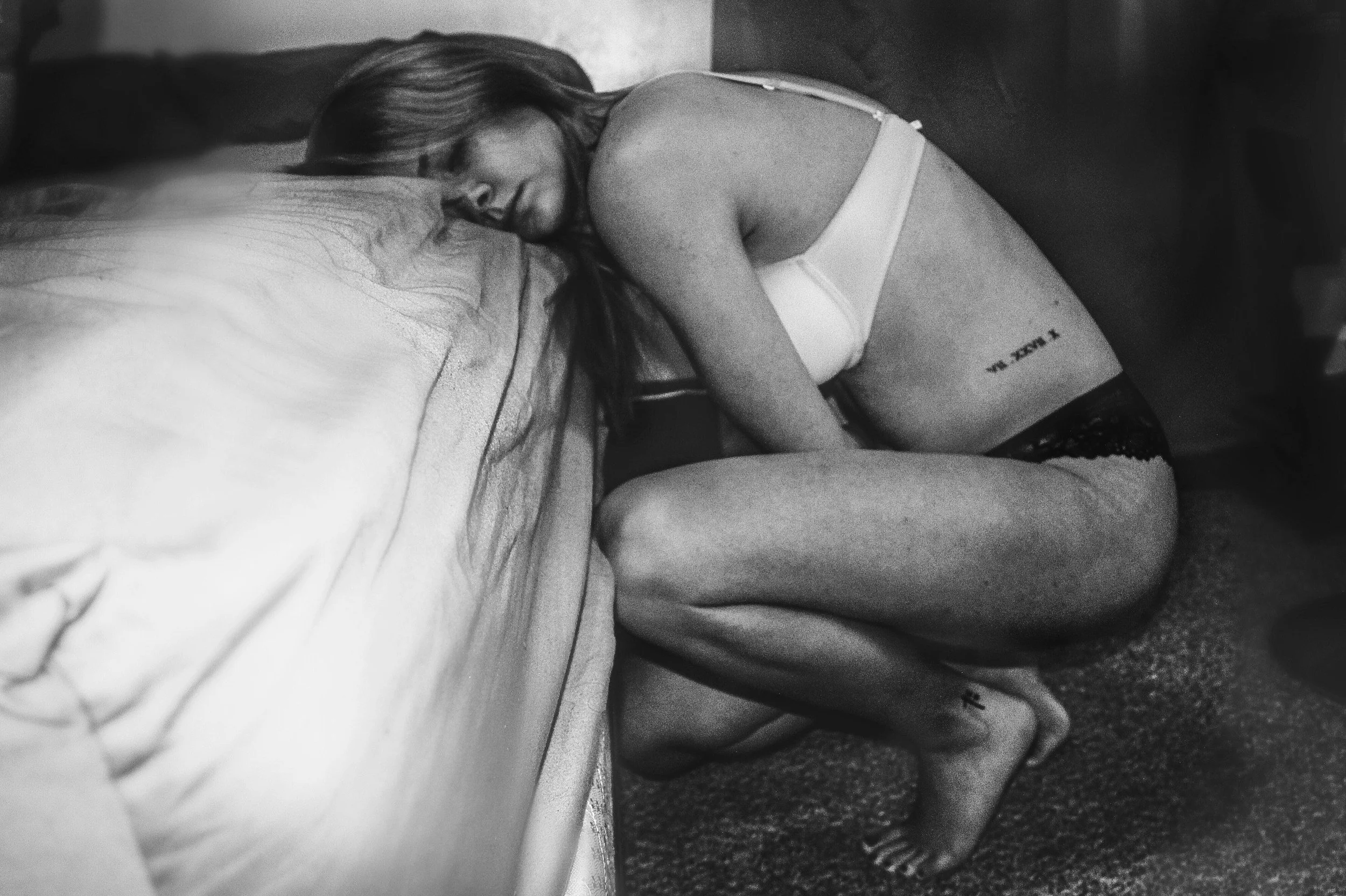
“Because this is postpartum. These are the realities. And there are so few spaces in this world where postpartum experiences can be shared honestly.”
But the ad was rejected by ABC and the Oscars because it was deemed “too graphic.” Frida Mom was asked to create an ad with a gentler, warmer portrayal of postpartum. They opted not to and it didn’t air at all.
Frida Mom uploaded their ad on to their YouTube and yes, I had a reaction to watching it, and a whole other reaction when I learned it was rejected. A lot of mothers clearly did too because the Frida Mom commercial on YouTube now has over 10 million views. Because this is postpartum. These are the realities. And there are so few spaces in this world where postpartum experiences can be shared honestly. That image of the mom in the middle of the night has been lived by so many of us, and by countless mothers and birthing people before us. It crosses cultures, generations, and communities.
Yet here we are again: another moment where people choose not to see or talk about postpartum for what it actually is.
Honestly, I’d even argue that the Frida Mom ad was a “gentle” and “kind” portrayal of postpartum. I didn’t see a single milk stain on that mom’s oversized t-shirt. No incision pain, no cracked nipples, no clogged ducts, colic, blow outs, pelvic floor dysfunction, night sweats…. none of it. The ad showed a cleaned-up version of postpartum, and people still identified with it, because even that glimpse is more real than the watered-down portrayals we are used to seeing.
The realities of postpartum aren’t just sitting in bed blissfully with your beautiful newborn while people bring you casseroles and homemade lactation cookies. I’m not saying postpartum is all a horrible and uncomfortable time. There are absolutely moments that feel like a love nest: warm, tender and delicious. But, it also comes with massive changes, transitions, challenges, sleepless nights, and physical healing that’s uncomfortable and disorienting and can’t go unspoken. Let’s also remember that one in five mothers don’t immediately feel that “love nest.” Many are overwhelmed by anxiety and sadness that doesn’t disappear after the first 2–3 weeks. To portray postpartum only as a warm fuzzy bubble is misleading and wrong.
Setting women and birthing people up with unrealistic expectations is a surefire way to make them feel like they’re failing. In my practice I see mothers, parents, and birthing people who tend to turn the blame inward when reality doesn’t match the dream, the fantasy, or the Instagram version.
“…maybe we would stop blaming ourselves, our abilities, or our worth when things don’t look the way we hoped or imagined.”
What’s wrong with me?
Why is this so hard for me?
If the baby is happy, shouldn’t I be happy too?
Women and birthing people end up carrying this guilt, when in reality, they’re not the ones failing. It’s a culture terrified of naming the truth about postpartum and motherhood, and a society that routinely fails to support families in the ways they actually need. Maybe if we talked openly about the challenges of postpartum, we’d have maternity leave and maternal care that reflected an understanding of those challenges.
In the United States, the Family and Medical Leave Act (FMLA) provides eligible employees up to 12 weeks of job-protected leave for certain family and medical reasons including the birth of a child or placement for adoption or foster care. BUT, and here’s the big BUT: there is no federal guarantee of paid parental leave for most private-sector workers. Access to paid leave varies wildly depending on your employer, your state, and what benefits are offered.
A year ago Frida Mom launched a new platformed called Frida Uncensored which is dedicated to providing resources to women about pregnancy, postpartum recovery, preparing for labor and delivery uncensored. Their attempt is to provide uncensored educational materials to women so they can be adequate prepared in this new chapter in life, and I’m here for it.
If we start talking openly and honestly about postpartum maybe we would stop blaming ourselves, our abilities, or our worth when things don’t look the way we hoped or imagined. The massive life transitions of postpartum and parenthood are messy, unstructured, emotional. If we could support families in ways that normalize that wild, world-upending shift, maybe the crash landing wouldn’t feel so isolating. If we were not fed sanitized “gentle” versions of these often messy times, would we be a little gentler on ourselves?